Instagram (Meta)
Instagram, or Meta, works to fight the spread of misinformation using third-party fact-checkers that are certified through the non-partisan International Fact-Checking Network (IFCN).
“We don’t think a private company like Meta should be deciding what’s true or false, which is exactly why we have a global network of fact-checking partners who independently review and rate potential misinformation across Facebook, Instagram, and WhatsApp.”
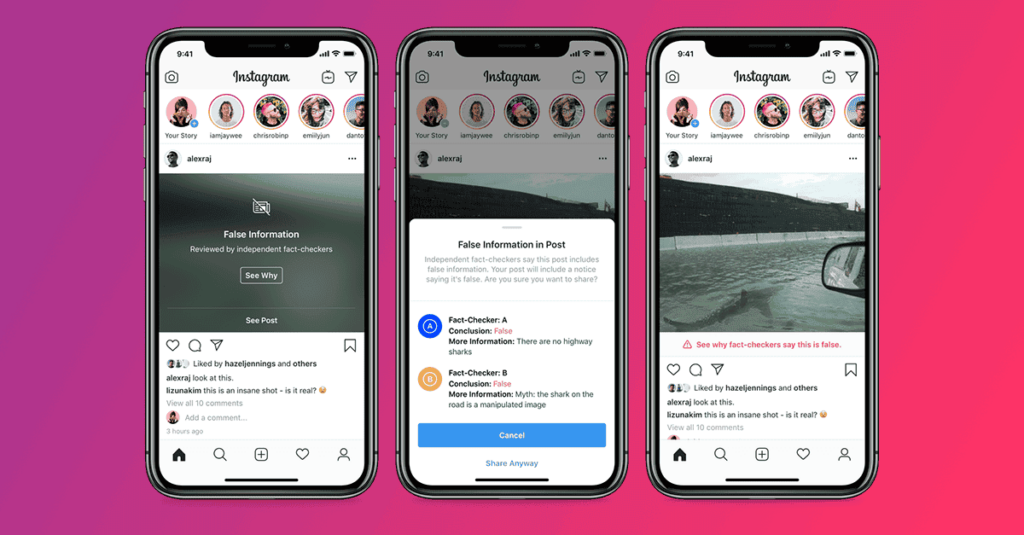
Instagram utilizes a combination of feedback from users as well as technology to determine what needs to be sent to fact-checkers.
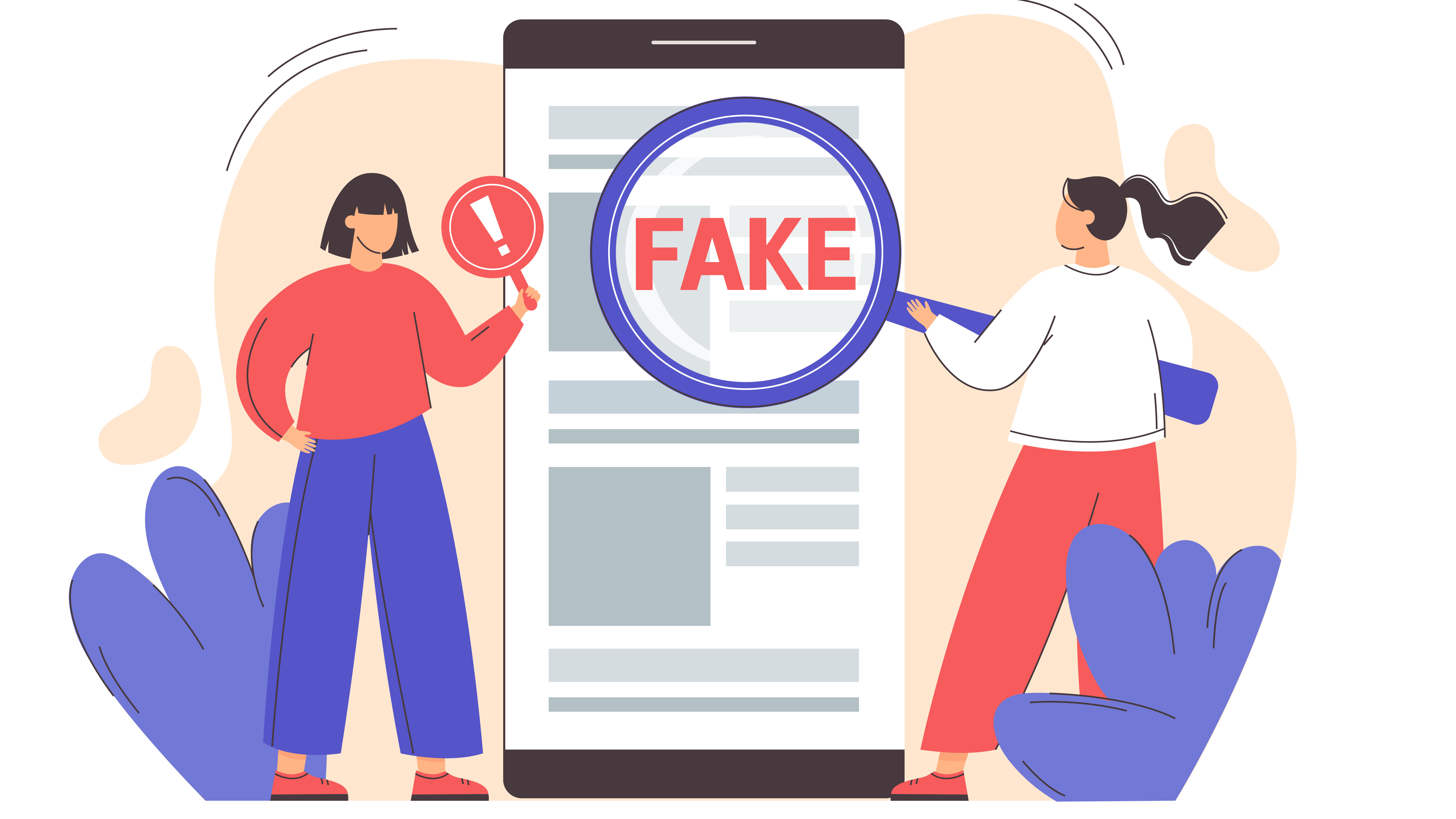
As a user, once a post has been flagged, Instagram gives users the option to decide for themselves what to read, trust, and share. A post flagged for containing misinformation will still be accessible, but the image will be blurred out and have a text overlay stating that false information has been identified. Users then have the option to see why it has been flagged, as well as the option to view the post anyway.
On the back end, Instagram reduces the post’s distribution by removing it from Explore and hashtag pages. It also communicates with Facebook and will automatically label identical content across platforms.
They also offer quite a few built-in tools that can be turned on or off in each account depending on a user’s preference. In my personal experience, these tools are enabled by Instagram without the user’s knowledge. While I find it important for a company to take action regarding the spread of misinformation on their site, as a user, I find it annoying to be restricted access to content without my knowing it is being done.
In an effort to prevent repeat offenders from spreading misinformation, user accounts that repeatedly post misinformation will be restricted in various ways. Users may get a warning when trying to tag or share information from flagged accounts. The accounts will also be made more difficult to find. In extreme circumstances, when an account goes against community guidelines, it will be disabled entirely.
Overall, I think Instagram does a fairly good job of implementing tools that can help limit the spread of misinformation. The only thing I would change would be in regard to the filters they automatically enable in the app. As a user, I want to be made aware of any filters that automatically restrict my access to content. If Instagram were more transparent with the filters they enable, it would help increase the public’s trust in the platform.
X, formerly Twitter
The social media platform X, formerly Twitter is an interesting social media platform to research because it has gone completely against the grain. Since Elon Musk‘s takeover of X, the company has gotten rid of content moderation teams, which is unheard of in any online space. While the goal was to provide users with the ability to access and share all information without restriction, bad actors are showing that this may not have been a good move for X.
According to European Commission Vice President Vera Jourova, “X had the “largest ratio of mis/disinformation posts” among the platforms that submitted reports to the EU.” (Sept. 2023)
X has shifted to a new model where you can pay for verification of your account. While this may seem like a good idea because a user has verified they are a real person, this does not mean they are sharing reliable information, as proven by NewsGuard.
“Utilizing a combination of human and artificial intelligence, NewsGuard reviewed the top 250 posts on X containing misinformation that received the most likes, reposts, replies and bookmarks since the start of the conflict on Oct. 7. The analysis found that 186 accounts of the 250, 74 percent, had been verified.”
They have also launched engagement-based revenue sharing. The changes that have been made to the company since Musk’s takeover have led to a flood of misinformation on the site.
I do not personally use X. My Twitter account was hacked years ago, and I was never able to regain access. With all of the drama surrounding the platform, I was never tempted to sign up again. After reviewing the large amount of misinformation being spread on the platform, it does not appeal to me in the least. If I were going to change anything about Twitter, it would be to regain trust of it’s users. I would put efforts into banning bot accounts and removing the paywall for verified users.
There is a stark difference between each of these companies approaches to preventing the spread of misinformation. While it is not required, I think there is a lot of value in companies taking responsibility for providing reliable and true content to users. Sometimes the filters and warnings can get annoying, but I would much rather be notified that something may be wrong and do my own research than be bombarded with misinformation that is being spread with malice.